

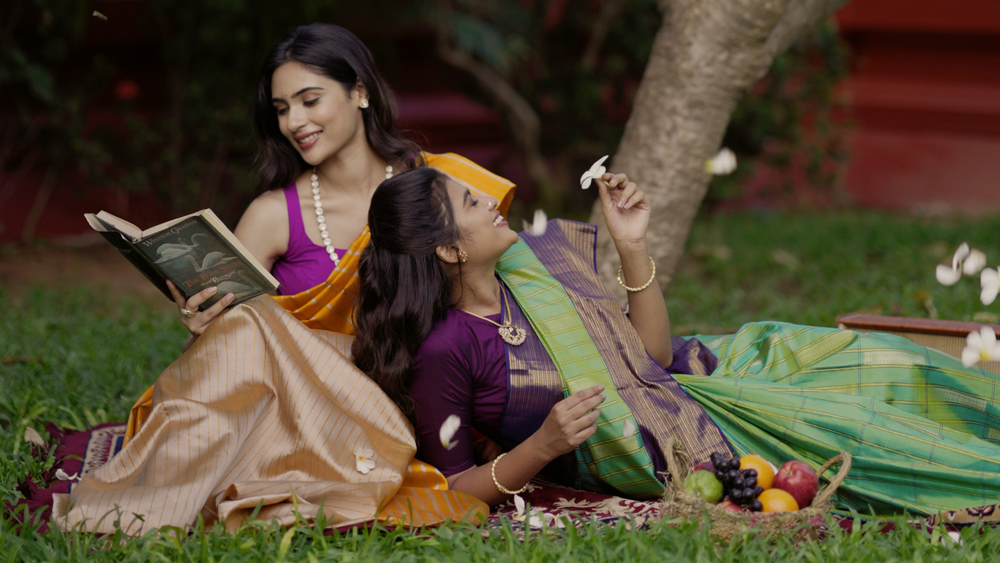
Ganesh Chaturthi in Silk: The Colours of Celebration
Why We Celebrate, and Why Silk
Every year, homes across India pause to welcome a guest who arrives with a trunk full of blessings. Ganesh Chaturthi marks the birth of Lord Ganesha, the remover of obstacles, the deity invoked before any new beginning. For ten days, clay idols of Lord Ganesha take their place on home altars and street pandals, and entire neighbourhoods turn into one long, joyful welcome party. Modaks are shaped by hand, doorways are lined with mango leaves, and prayers rise with the scent of camphor and jasmine.
South India brings its own signature to this celebration, and pure Kanjivaram silk for Ganesh Chaturthi sits at the centre of it. Silk has long been the weave chosen for temple visits, weddings, and festival mornings, worn as a mark of respect toward the divine. The gold zari running through a Kanjivaram border echoes the same shimmer seen on temple gopurams and deity ornaments, while the weight and sheen of the silk make it the natural choice for a day meant to feel ceremonial. For Pashudh, the festive wardrobe is where colour, craftsmanship and occasion come together—each Kanjivaram offering its own interpretation of celebration.
A Quick Guide to Festival Colours
Across Indian festive traditions, colours often carry meanings of their own. During Ganesh Chaturthi, shades of red, yellow, green, gold and blue can beautifully reflect different moods of the celebration and here is a simple guide to keep close while choosing your drape.
Red speaks of invocation and energy, the very colour of the first offering. Look for a vermilion silk saree or a red silk saree styled for pooja mornings.
Yellow and gold carry the warmth of turmeric and the promise of prosperity. A mustard silk saree or a gold zari saree captures this radiance beautifully.
Green stands for renewal, echoing the modak leaf and the freshness of new beginnings. A bottle green silk saree brings this energy into the wardrobe with ease.
Blue holds the quiet depth of dusk and devotion, worn often for the visarjan evening. A royal blue silk saree or a festive blue Kanjivaram suits this contemplative close beautifully.
Red — The First Offering
The first colour a devotee reaches for is red. Kumkum dabbed on the idol, vermilion streaked across the forehead of the priest, hibiscus flowers offered at the feet of Ganesha — red opens every ritual, speaking the language of invocation, energy, and beginnings. Draping this colour during Chaturthi becomes a quiet echo of the pooja table itself.

The Bright Red Meenakari Kanjivaram Silk Saree carries this symbolism into its weave. A floral jaal in gold zari runs across the red body, lifted further by touches of green and magenta meenakari work, while a bubblegum pink border and pallu bring festive contrast while honouring the reverence red demands. Wear it for the sthapana morning, when the idol first arrives home, and let the colour speak before a single prayer begins.
Yellow & Gold — Turmeric and Prosperity
Turmeric arrives next, ground fresh and offered as haldi before the aarti begins. Yellow signals prosperity, purity, and the optimism festivals are built on. Gold, its richer cousin, carries this symbolism into pure luxury, appearing wherever devotion meets grandeur — deity crowns, temple bells, the zari running through a six-yard drape.

The Mustard Yellow Tissue Kanjivaram Silk Saree leans into this warmth with a gold zari tissue body scattered in bunch rose motifs and meenakari florals in sky blue, punch pink, and parrot green. Its deep blue border, worked with mayil kan motifs and a shimmering tissue panel, gives the mustard tone somewhere elegant to land. For a richer gold-on-gold story, the Dual Shaded Honeycomb Kanjivaram Silk Saree offers a honeycomb and aubergine palette, lit with silver and gold zari peacock buttas, annam and mango motifs weaving across its border. Together, these two sarees carry the same message: yellow and gold are the wardrobe equivalent of a blessing.
Green — The Modak Leaf and New Beginnings
Banana leaves line the floor during Ganesh Chaturthi feasts, and green marks freshness, growth, and the promise that follows every ending. It is the colour of the modak leaf wrapping, the colour of doorway torans, the colour that says the celebration is alive and growing.

The Bottle Green Kanjivaram Silk Saree captures this energy while adding festive warmth through an orange traditional border, woven in gold zari and finished with a punch pink selvedge. Elephant and horse motifs move across the body in rani pink and red meenakari, a fitting tribute given the guest of honour this festival welcomes. Pair it with the matching orange blouse for a look rooted in ritual and ready for celebration.
Blue — Dusk, Devotion, and the Immersion
As the festival closes, the mood shifts. Visarjan processions move through the streets at dusk, the sky deepens into blue, and devotees carry the idol toward the water with equal parts joy and quiet longing. Blue holds this contemplative note beautifully, standing for depth, devotion, and the vastness the idol is about to return to.

The Royal Blue Retta Petta Border Kanjivaram Silk Saree mirrors this final chapter, its multi-shaded body blending royal blue, red, and green, self-woven zari motifs glowing like molten gold across the surface. A rani pink pallu edged in gold zari stripes and a rust orange retta petta border complete the drape, making it the saree best suited for the evening the festival winds down and next year's promise quietly begins.
Styling Your Ganesh Chaturthi Silk
- For morning pooja: Keep the look traditional with jasmine flowers, temple jewellery and a classic bun.
- For family celebrations: Choose statement earrings and a softer drape for an elegant festive look.
- For evening festivities: Let a rich blue or jewel-toned Kanjivaram take centre stage with gold jewellery and a sleek hairstyle.
Choosing Your Festival Kanjivaram
Every colour in the Ganesh Chaturthi calendar tells its own story, and a Pashudh Kanjivaram brings that story to life, one handwoven thread at a time. Whether the morning calls for red's energy, gold's abundance, green's renewal, or blue's quiet devotion, each drape becomes part of the ritual itself, matching the spirit of the day.
Explore the complete Pashudh Kanjivaram collection and find the drape that carries your celebration forward.
This Ganesh Chaturthi, may your home be filled with warmth, your prayers be heard, and every celebration be wrapped in colour, craft and tradition.
FAQ
1) Which silk saree is best for Ganesh Chaturthi?
Kanjivaram, silk cotton, and other traditional silk sarees are elegant choices for the celebration.
2) Why are bright colours popular during Ganesh Chaturthi?
Bright colours create a festive look and complement the joyful spirit of the celebration.
3) How do I style a silk saree for Ganesh Chaturthi?
Pair it with a traditional blouse, gold jewellery, flowers, and a simple festive hairstyle.
4) Which saree colours create a traditional festive look?
Deep red, mustard yellow, emerald green, royal blue, and rich pink create a classic festive look.
5) What does the colour of a silk saree represent during Ganesh Chaturthi?
Festive colours can reflect joy, devotion, prosperity, and the celebratory spirit of the occasion.
Leave a comment