

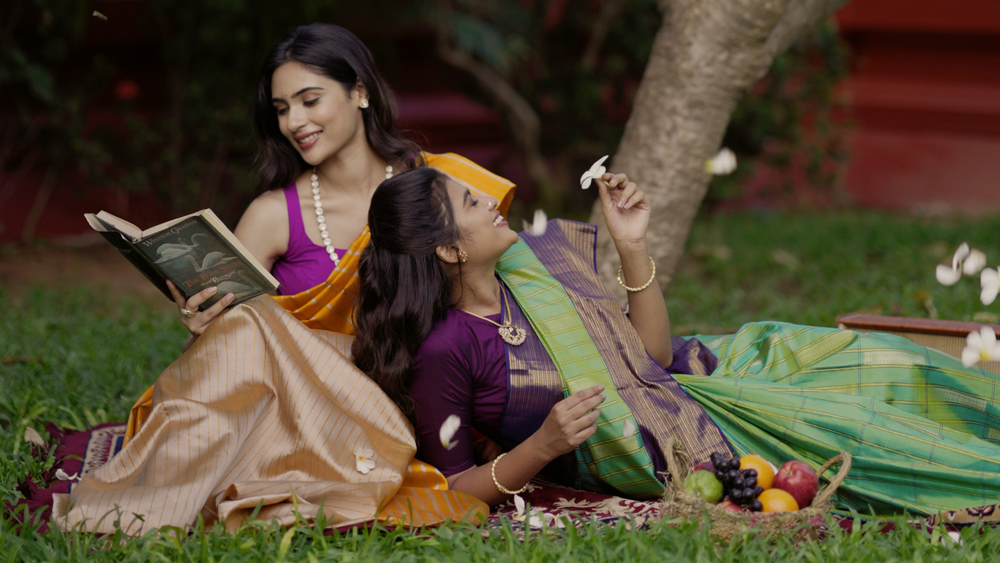
Checks and Buttas: Reading Your Kanjivaram's Border Before You Buy
Standing in front of numerous Kanjivaram sarees and not knowing where to start? The body might catch your eye first, but the real story is almost always sitting quietly at the edge: the border. Once you know how to read silk saree borders, recognising the painstaking craftsmanship behind each Kanjivaram saree and appreciating the traditions woven with it becomes easier. This is a Kanjivaram silk saree buying guide that you actually need before you buy.
Two things you'll spot on many borders are checks and buttas. They sound simple, but each one carries meaning. Learning how to read Kanjivaram saree border details like these is what separates a rushed purchase from a piece you'll actually love ten years from now. So before you swipe that card, let's break down what the border is really saying.
At Pashudh, we have built a brand around the belief that traditional silk sarees deserve more than a glance. Every handwoven saree on our shelves is chosen for its story. Whether you're hunting for bridal silk sarees or something for a Friday-evening dinner, Pashudh curates pure silk sarees that weave together tradition and style.
Checks in the Border: The Grid That Grounds the Saree
Checks Kanjivaram sarees are one of the easiest patterns to spot once you know what you're looking for; they are small, even squares running along the border or sometimes even across the body. They give the saree a structured feel, which is why they pair so well with plain or lightly worked bodies. A well-made check pattern should look crisp and consistent, not uneven or blurry at the edges. On an authentic Kanjivaram silk saree identification checklist, evenly spaced checks are a genuinely reliable marker of good craft.
Buttas in the Border: Small Motifs, Big Meaning
Kanjivaram buttas meaning goes back generations; these are small, standalone motifs scattered along the border or body, often shaped like mangoes, peacocks, annams, coins, or flowers. Buttas are a detail you'll only catch on a second look, but once you do, you can't stop noticing them. A mango motif Kanjivaram silk saree usually signals fertility and abundance, while a peacock butta saree design leans festive and celebratory. Run a finger over the motifs if you can, genuine zari buttas have a slight raised texture, not a flat print feel.
Other Common Kanjivaram Borders You'll Come Across
Checks and buttas aren't the only styles. Here's a quick shortlist of borders you'll keep seeing:
Retta Pett Border: Two distinct strips running parallel to each other along the edge, giving the border a layered look.
Thalampoo/Temple Border: Modeled on temple silhouettes, this border repeats small, tower-like motifs in a continuous row along the edge. It's one of the oldest and most recognised border styles.
Kodi Visiri Border: The term literally translates to creeper fan. It features a winding floral creeper pattern that adds a touch of nature.
Ganga Jamuna Border: This border pairs two contrasting colours or metals in distinct bands side by side, a way of building contrast.
Getti Border: 'Getti' means solid or firm, and this border is built to match dense and heavier colour borders, in high contrast to the body.
Kaal Eranguna Border: Translating to descending steps, this border arranges its motifs in a staggered formation, creating a layered, cascading visual along the edge.
New Arrivals: Borders Worth a Closer Look
We have new arrivals that show off stylish borders with butta and checks.
Purple Kanjivaram Silk Saree

The border here is checked with tones of purple. Small buttas sit scattered throughout the checked border, giving it a touch of zari. A strong pick if you want a pure handwoven saree.
Shop Purple Kanjivaram silk saree while it's in stock.
Black Kanjivaram Silk Saree

A small Thalampoo border edges the dense red border. The contrast red border has scattered zari buttas, making it perfect for evening galas and gatherings. It is also a unique choice for wedding silk sarees.
Browse the Black Kanjivaram silk saree with a red border for your next big event.
Yellow Kanjivaram Silk Saree

This one is a proper Kanjivaram saree with multi-line checks on the contrasting pink border. It's a good example of traditional Kanjivaram motifs. Ideal for daytime functions or festive mornings.
Take a closer look at the Mango Yellow Kanjivaram silk saree.
Turquoise Green Kanjivaram Silk Saree

An unusual colour pairing from our pure silk sarees range. The turquoise body and contrast lavender check border combination gives a stylish twist to a traditional design. Good for anyone who prefers a subtle style.
Discover the Turquoise Green Kanjivaram silk saree for yourself.
Candy Pink Kanjivaram Silk Saree

A bright take on check sarees. The multicoloured checked border does most of the talking here. This is the kind of piece that works well for colourful celebrations.
Shop the Candy Pink Kanjivaram silk saree before it's gone.
Before You Buy, Look at the Edge
Borders are where the character of a Kanjivaram saree lives. Checks bring structure, buttas bring meaning, and others add their own chapter to the story. Once you start noticing these details, you'll never look at a saree the same way again.
If you're shopping for wedding silk sarees, everyday Kanchipuram sarees, or something special from Kanchipuram itself, take a moment with the border before you decide. And if you'd rather skip the guesswork entirely, our Pashudh has already done the checking for you. Visit the Pashudh online store today and find a Kanjivaram border that's actually worth talking about
FAQs
1) What do checks on a Kanjivaram saree border mean?
Checks are small, even squares woven along the border, sometimes across the body too. They give a saree a structured look and pair well with plain or lightly worked bodies. Evenly spaced, crisp checks are a reliable sign of good craftsmanship on a Kanjivaram saree.
2) What is a butta in a Kanjivaram saree?
A butta is a small, standalone motif scattered across the border or body of a saree, often shaped like a mango, peacock, annam, coin, or flower. Genuine zari buttas have a slight raised texture. Mango buttas usually signal fertility and abundance, while peacock buttas lean festive and celebratory.
3) How can I tell if a Kanjivaram border is handwoven and authentic?
Look closely at the checks and buttas. Handwoven checks stay crisp and consistent at the edges rather than blurry or uneven, and genuine zari buttas have a slightly raised, textured feel rather than a flat printed look. Running a finger over the motif is one of the simplest ways to check.
4) What is the difference between a temple border and a Ganga Jamuna border?
A temple, or Thalampoo, border repeats small tower-like motifs in a continuous row, inspired by temple silhouettes. A Ganga Jamuna border instead pairs two contrasting colours or metals in distinct bands side by side. Both are traditional Kanjivaram border styles, but temple borders lean motif-driven and Ganga Jamuna borders lean colour-driven.
5) Where can I buy authentic Kanjivaram silk sarees with detailed borders?
Pashudh curates handwoven Kanjivaram silk sarees with borders in checks, buttas, temple, and Ganga Jamuna styles, ranging from bridal silk sarees to everyday Kanchipuram sarees. Each saree is chosen for its craftsmanship and story.
Leave a comment