

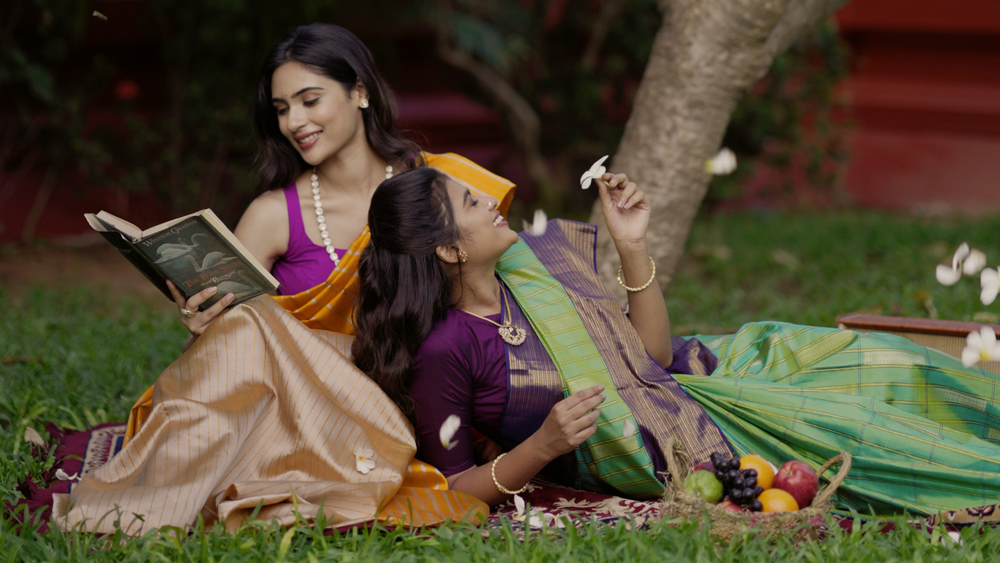
Paalum Pazhamum: An Old Weave for the Contemporary Wardrobe
The Film That Named a Weave
In 1961, at the height of Tamil cinema's golden years, a film about the quiet balance between duty and devotion captured audiences across Tamil Nadu. Its title was Paalum Pazhamum, milk and fruit. Somewhere in that decade, master weavers in Kanchipuram stood back from a length of handwoven silk fresh off the loom, its body broken into bold, interlocking checks, and thought of that same film. They lent the pattern its name. Six decades on, the name has quietly outlived most memories of the film itself, carried forward instead by a Kanjivaram silk saree checks design that has become one of Tamil Nadu's most recognisable traditional weaves. Ask a woman in Tamil Nadu about paalum pazhamum today, and she is far more likely to gesture toward her grandmother's cupboard than a cinema hall. This is the story of how a movie title became one of the most cherished checks in Kanchipuram silk saree weaving, and why a pattern steeped in heritage still belongs in a wardrobe now, not folded away for one occasion a year.
What "Milk and Fruit" Actually Means
Paalum pazhamum translates to milk and fruit, two humble, everyday things said to make a body whole. On the loom, that idea was elevated into a traditional Kanjivaram checks saree built from colours considered auspicious in Tamil tradition: red, green, and mustard yellow, threaded across the body in tight, symmetrical squares with the precision of a craft passed down through generations. Each colour carried its own meaning at festive occasions, red for celebration, green for prosperity, mustard for blessing, long before "auspicious colours" became a line in a product description. That balance is easier to witness than to explain in words.

Pashudh's Multicolor Paalum Pazhamum Pure Zari Kanjivaram Silk Saree holds the idea in bottle green, arakku, and mustard yellow, worked across the body in the traditional check, with large annam and rudhraksh zari buttas resting inside each square and a rich arakku pallu bringing the drape to a graceful close.
Kattam, Decoded
In Tamil weaving, a check is called kattam, and kattam carries far more weight than a simple grid of lines. It reads as an enclosed square, a space set apart, historically associated with something protected and revered. That symbolism is part of why checks recur so often across ceremonial drapes in Tamil Nadu, from Kanchipuram silk sarees to the koorai sarees worn at weddings. A checked saree was never treated as a mere background pattern. It carried structure, and with that structure, intention.
The Weaver's Challenge
Achieving that structure demands a different order of skill than a plain body finished with a contrast border. A solid colour body asks only one thread to run true. A multicolour check calls on two or more colour threads to cross in both directions, warp and weft, and meet at precisely the same point, square after square, across five and a half metres of silk. A single dropped thread, and the entire grid drifts out of alignment. This is why an heirloom weave like paalum pazhamum is entrusted to the most seasoned hands on a loom, rarely the newest ones, a mark of true handwoven Kanchipuram craftsmanship.

Pashudh's Multicolor Paalum Pazhamum Kanjivaram Silk Saree is a study in that discipline, its red and green checks running immaculately across the body, gold zari lines and diagonal zari buttas woven in without a single break in the grid, the entire piece resolving into a navy blue pallu and border of quiet regality.
Old Weave, New Wardrobe
For most of its history, paalum pazhamum was never confined to silk alone. Weavers rendered the same checks in lighter silk cotton, meant for everyday wear rather than a single grand occasion, and it is precisely this versatility that allowed the pattern to endure long enough to reach a Kanchipuram silk saree loom at all. That everyday life is worth honouring, because this weave was never meant to sit folded away, reserved for one wedding a lifetime. Contemporary weaving has found an elegant way to carry that spirit forward, sometimes not across the whole body but distilled into a single, refined element, the way a treasured family recipe survives in one dish rather than the entire feast.

Pashudh's Baby Pink Paalum Pazhamum Kanjivaram Silk Saree keeps the checks confined to the border alone, allowing a tissue shimmer body in baby pink, traced with gold and silver zari zigzag work, to carry the rest of the story. Paired with a plain contrast blouse, it reads less like an heirloom revival and more like heritage finding its most understated, contemporary expression.
Pick Your Paalum Pazhamum
At Pashudh, a film gave this weave its name in 1961. Six decades on, the name has moved past the film entirely, carried instead by weavers who keep the checks aligned thread by thread, and by the women who choose the pattern for reasons that have nothing to do with a movie plot. Pashudh's role in that story stays simple: weaving tradition forward without asking it to become something else.
Explore the edit of handwoven Kanchipuram silk sarees online, whether it is the bold classic check, the precise multicolour weave, or the pastel border take that speaks to you, there is a paalum pazhamum saree ready for a wardrobe that already knows how to wear tradition well.
FAQs
1) Is Paalum Pazhamum suitable for modern saree styles?
Yes, its classic weave can be styled with modern blouses and accessories for a contemporary look.
2) How can I style a Paalum Pazhamum saree?
Pair it with a minimal blouse, traditional jewellery, and contemporary accessories for an elegant look.
3) Are traditional weaves suitable for festive occasions?
Yes, their heritage appeal makes them a beautiful choice for festivals, celebrations, and cultural events.
4) Can traditional weaves be worn in contemporary ways?
Yes, experimenting with blouse designs, draping styles, and accessories can give traditional weaves a modern look.
5) Is Paalum Pazhamum a handloom weave?
Traditional Paalum Pazhamum textiles are associated with Indian weaving heritage and artisan craftsmanship.
Leave a comment