

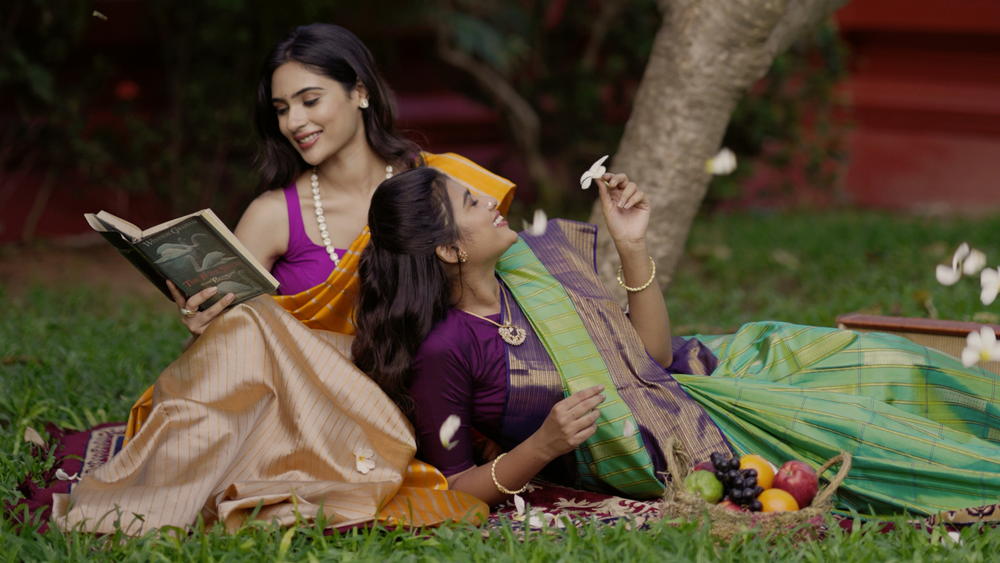
Kanjivaram Silks, Auspicious Colours & Traditions That Stay With Us
Diwali begins long before the first diya is lit.
It begins with the familiar rituals. The house is cleaned, the kolam takes shape at the entrance, flowers find their place, and trays of sweets are prepared for family and friends. There is a certain joy in returning to these traditions, year after year. And somewhere between the preparations and the prayers, there is always the question of what to wear.
For many South Indian households, the answer has a special place in the wardrobe: a Kanjivaram silk saree.
Rich silk, lustrous zari, intricate borders and colours that seem to hold stories of their own. A Kanjivaram is more than festive attire. It is a connection to a weaving tradition that has been cherished across generations, worn for auspicious beginnings, family celebrations and occasions that become part of our memories.
At Pashudh, we look at festive dressing through this connection between craft, culture and the woman who wears the saree. This Diwali, let us explore the colours, motifs and traditional Kanjivaram weaves that bring a little more meaning to the celebrations.
A Kanjivaram silk saree is a popular traditional choice for Diwali, known for its rich silk, intricate zari work, distinctive borders and traditional motifs. Colours such as arakku, red, yellow, green and purple offer different festive styling options, depending on personal preferences and family traditions.
The tradition of wearing silk for Diwali
In many South Indian homes, wearing a new or special silk saree for a festival is a cherished custom. It may be the saree chosen for Lakshmi Puja, the one worn while visiting elders, or the drape reserved for the family photograph that everyone looks forward to.
Silk has long been associated with auspicious occasions, celebrations and ceremonial dressing. The appeal of a Kanjivaram lies in the way its material richness comes together with the artistry of its weave.
The Kanchipuram weaving tradition is especially recognised for its rich silk, contrasting borders, distinctive pallus and intricate zari work. Traditional motifs and carefully considered colour combinations give each design its own character.
A festive Kanjivaram does not have to be new to be meaningful, either. An heirloom passed down by a mother, a saree chosen for a milestone celebration, or a new drape selected for this year's festivities can all hold a special place in the same tradition.
If you are looking for a saree for the season, explore Pashudh's collection of Kanjivaram silk sarees, where traditional influences meet a variety of colours, patterns and design sensibilities.
The colours of Diwali: Choosing a Kanjivaram with meaning
Colour is often the first thing we notice about a saree. During Diwali, it can also be a lovely way to bring together personal style and the spirit of the occasion.
Certain colours are traditionally associated with prosperity, auspicious beginnings, celebration and abundance. Their meanings vary across families and regional customs, but their place in festive wardrobes remains enduring.
Arakku and red: A celebration of auspicious beginnings
Few colours feel as closely connected to traditional festive dressing as red. From deep maroon to rich arakku, these shades carry a sense of ceremony and warmth.
Arakku Kanjivarams, in particular, offer depth and richness without relying on a bright red palette. When paired with gold zari, contrasting borders or traditional motifs, the result is a saree that feels beautifully suited to Lakshmi Puja and evening celebrations.

Consider the Arakku Kanjivaram Silk Saree – S1839(A). Its dual-shaded arakku body features gold zari kotthu designs, complemented by a peach-pink silk tissue border and a temple-inspired pallu. The interplay of these details brings traditional design elements together with a distinctive colour combination.
For women who appreciate a traditional palette with carefully considered contrasts, it is a beautiful example of how a Kanjivaram can feel both rooted and individual.
Yellow and gold: The warmth of festive light
Think of the golden glow of diyas, the warmth of turmeric, and the cheerful yellow of marigolds arranged for the puja. Yellow and gold naturally find their way into the visual language of Diwali.
Yellow is often associated with auspiciousness and new beginnings in Indian festive traditions. In a Kanjivaram, it can appear as a bright, celebratory body colour, a subtle golden tone or a contrasting element woven into the border and pallu.

For a striking traditional drape, explore the Bold Yellow Traditional Kanjivaram Silk Saree – S1798(A). Its gold zari coin motifs are complemented by a navy-blue border featuring traditional Yazhi, rudhraksha, elephant and peacock motifs.
It is a reminder that the beauty of a festive saree lies not only in its colour but also in the details woven into it.
Style it with traditional gold jewellery for a family puja or an evening spent celebrating with loved ones.
Green: A timeless choice for festive occasions
Green has a familiar place in Indian festive wardrobes, often evoking nature, renewal and prosperity. In silk sarees, its appeal lies in the variety of moods it can create.
Parrot green feels vibrant, leaf green feels fresh, and bottle green brings a deeper, more formal character to festive dressing. Paired with gold zari, contrasting pink borders or traditional motifs, each shade offers a different interpretation of the classic Kanjivaram.

The Bottle Green with Meenakari Kanjivaram Silk Saree – S1732(C) brings together a luminous bottle-green body, gold zari detailing and a reddish-pink border. The contrast gives the saree a distinctive festive presence while retaining the richness associated with traditional silk.

If you prefer a softer green palette, the Leaf Green Kanjivaram Silk Saree – S1769(B) offers another interpretation, with gold zari rudhraksh buttas and a midnight-blue border inspired by Mughal design.
Both illustrate how the same traditional weave can create very different festive expressions.
Purple: For a celebration with a little grandeur
Purple, violet and plum bring depth to a festive wardrobe. They are particularly lovely for evening celebrations, when zari details catch the light and contrasting colours become more pronounced.

For those who enjoy traditional motifs in a less expected colour palette, the Eggplant Purple Kanjivaram Silk Saree – S1203(G) pairs a rich purple body with gold and silver zari stripes. Its pastel-green border and pallu feature traditional motifs inspired by birds and animals, adding another layer of detail to the design.
The combination makes a compelling choice for a festive evening, a family gathering or a celebration where you want your saree to feel distinctive without losing its connection to tradition.
These are just a few of the colours to discover in Pashudh's traditional Kanjivaram silk saree collection.
Beyond colour: The stories woven into a Kanjivaram
A Kanjivaram is often remembered for its colour first. Look a little closer, however, and the weave begins to tell another story. The motifs, borders and pallu designs are integral to the character of a saree. Traditional weaving draws from a rich vocabulary of nature-inspired forms, geometric patterns, temple architecture and cultural symbolism.
Here are a few details worth noticing when choosing your Diwali saree.
The peacock motif
The peacock appears frequently in Indian decorative traditions and is admired for its beauty and graceful form. Woven into a saree, it can bring movement and intricate detail to the body, border or pallu.
The Yazhi motif
The Yazhi is a mythical creature found in South Indian temple art and sculpture. Its stylised form is a striking example of how architectural and cultural influences find their way into traditional textile design.
Rudhraksh and floral buttas
Small motifs can transform the appearance of a saree. Rudhraksh-inspired patterns, floral buttas and other repeating elements add texture and rhythm, creating interest across the silk without overwhelming the overall design.
Zari borders and pallus
A contrasting border frames the drape, while the pallu often becomes the focal point of the saree. Gold and silver zari, intricate patterning and differences in colour can give each section its own visual character.
When exploring authentic Kanjivaram silk sarees, take a moment to look beyond the overall colour. The motifs and weaving details may be what make a particular saree feel right for you.
Dressing for the rituals, not just the photographs
Diwali is full of little moments that rarely make it into the photographs.
It is helping arrange the flowers before the puja, greeting relatives at the door, lighting the diyas, sharing sweets and sitting down to a meal that brings everyone together. A festive saree becomes part of these moments. And the way you choose to wear it can be just as personal as the saree itself.
For a traditional Lakshmi Puja, a richly coloured Kanjivaram with a contrasting zari border can complement the ceremonial setting. Pair it with classic gold jewellery, a neatly draped pallu and a blouse that brings out the border.
For a daytime gathering, consider a brighter colour such as yellow or leaf green. Traditional earrings and a simple hairstyle can keep the look elegant without making it feel overly formal.
For an evening celebration, deeper shades such as arakku, bottle green and eggplant purple work beautifully with antique gold jewellery. You can also pick up a secondary colour from the saree's border for your blouse, creating a coordinated look without matching every detail.
The idea is not to follow a set of rules. It is to choose a drape that feels comfortable, meaningful and entirely your own.
A Diwali tradition, carried forward in silk
Every Diwali brings its own memories. The familiar rituals remain, even as families grow, traditions evolve and personal styles change. The Kanjivaram continues to hold its place in this story because it brings together so many things we value about festive dressing: the richness of silk, the artistry of weaving, the significance of colour and the pleasure of wearing something made for a special occasion.
At Pashudh, these elements are an invitation to explore the heritage of Kanchipuram silk through a contemporary wardrobe. From the depth of arakku and bottle green to the brightness of yellow and the richness of purple, every colour offers another way to approach the festive season.
This Diwali, choose a saree that connects with your traditions, reflects your own sense of style and feels just as special when you wear it years from now. May the lamps shine a little brighter, the celebrations bring everyone closer, and the traditions we cherish continue to find their way into the years ahead.
Celebrate Diwali in the enduring beauty of Kanjivaram silk.
Explore the Pashudh Kanjivaram Silk Saree Collection.
Frequently Asked Questions
Which Kanjivaram silk saree is best for Diwali?
Arakku, red, yellow, green and purple Kanjivaram silk sarees are all suitable options for Diwali. Choose a shade that matches your personal style and the occasion, and consider the saree's zari work, border and motifs when making your selection.
Which colours are traditionally worn for Diwali?
Red, yellow, gold and green are popular choices in many Indian festive wardrobes because of their associations with auspiciousness, prosperity, celebration and renewal. Regional customs and family traditions differ, so choose a colour that feels meaningful to you.
What makes Kanjivaram silk sarees special for festive occasions?
Kanjivaram sarees are known for their rich silk, distinctive borders, intricate zari work and traditional motifs. Their association with weddings, religious ceremonies and family celebrations makes them enduring choices for festivals such as Diwali.
How should I style a Kanjivaram saree for Lakshmi Puja?
Choose a saree that suits your family's customs and the setting of the puja. Traditional gold jewellery, a well-fitted blouse and a neatly draped pallu complement the classic look of a Kanjivaram. Keep your styling comfortable enough for the rituals and celebrations throughout the day.
Where can I buy Kanjivaram silk sarees for Diwali online?
You can browse Pashudh's Kanjivaram silk saree collection online to explore traditional colours, zari detailing and a range of designs for festive occasions. Check individual product pages for current availability and delivery information.
Leave a comment